


How to Choose a Backdrop for Food & Product Photography
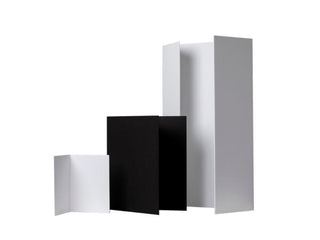
A useful photography backdrop fits your composition, supports the subject and gives you control over the background. Start with the size of the scene and the look you want, then choose the surface. V-Flat World's Duo Boards provide two printed designs on each rigid, washable PVC board.
Choose a size around the camera frame
A 24 x 24-inch board suits compact tabletop scenes such as a single dish, a drink or a small product. The XL 30 x 40-inch format gives you more room for multiple items, props and wider arrangements. The right choice also depends on camera angle: a low angle can reveal the edges of a small backdrop even when the product itself fits.
Before choosing, arrange your subject and props on a table and frame the shot with your camera or phone. Measure the area visible in that frame. Leave room to move objects and change your angle.
Match the printed design to the subject
- Light, quiet patterns: useful when you want the product, food or packaging to carry most of the visual attention.
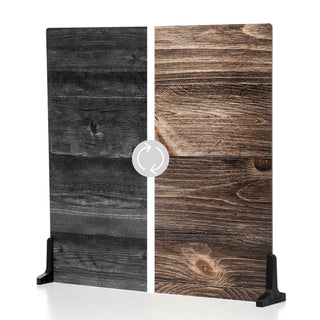
- Warm wood looks: a starting point for coffee, baked goods and homeware styling.
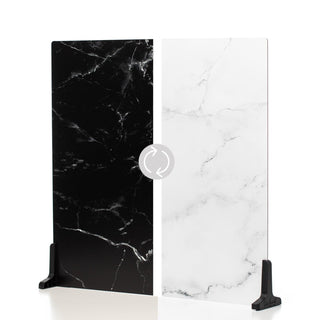
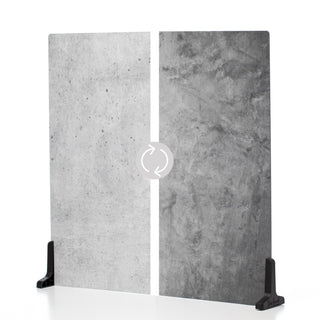
- Stone and concrete looks: options for simple food, beauty and product compositions.
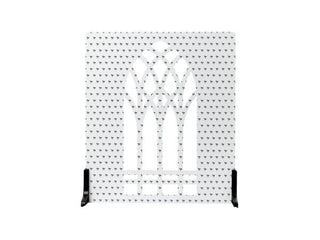
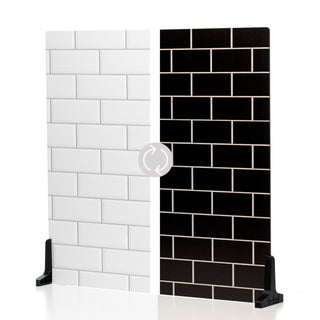
- Tile and decorative patterns: useful when the setting is part of the story; check that pattern scale works with your subject.
For example, Natural White Oak / Soft Fog Concrete offers two neutral printed looks, while Dark Walnut Chevron / Warm Wood Honeycomb provides warmer patterned options. Treat these as styling starting points and test them with your product colors.
Decide whether you need one board or two
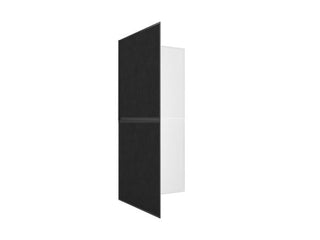
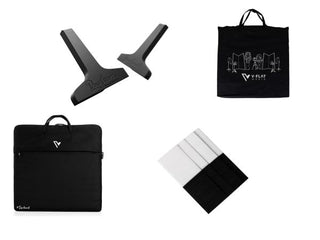
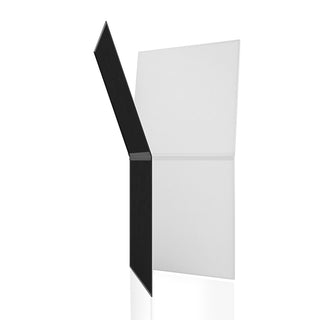
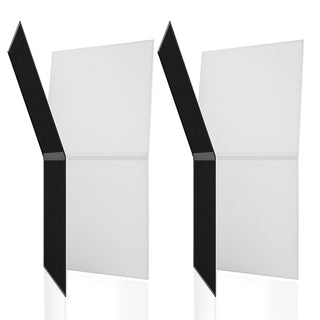
One board can lie flat for an overhead photograph or stand behind a subject as a background. Two boards let you create a tabletop floor-and-wall arrangement using the included Duo Legs. Each board has two designs, so a pair gives you four surfaces to combine across different shots.
Make a simple first setup
Start with one subject and a light source to the side. Take a reference image, then change only one thing at a time: the board's side, the light direction or the camera angle. Watch the shadows and highlights as well as the background. When photographing reflective objects, the surrounding room can appear in the subject itself; our reflection-control guide explains how to approach that problem.